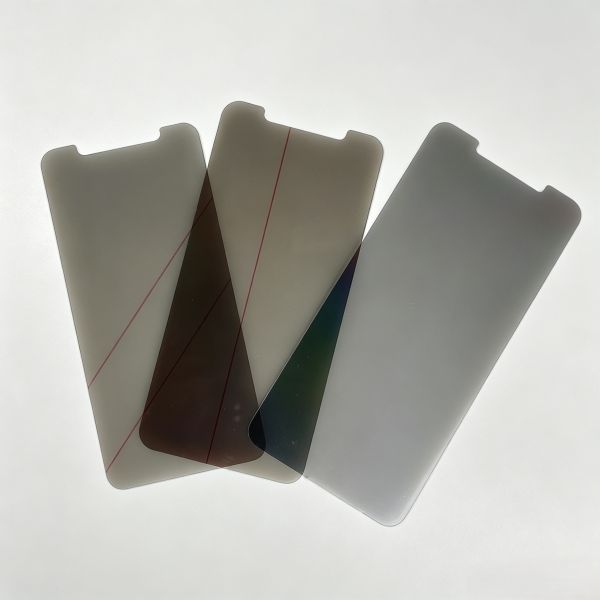
Polarizer Film
Polarizer is the core optical element of LCD display, realizing image display by selectively transmitting light of a specific polarization direction. Polarization degree ≥99.9%, supports TN/IPS types, custom punching and retardation compensation film lamination, meeting different LCD module polarization needs.
Key Features
- Polarization degree ≥99.9%, excellent contrast
- Supports custom punching and RTP lamination
- Retardation/compensation film composite optional
- Clean dust-free processing, controllable quality
Applications
LCD display · Automotive display · Instruments · Industrial control display module
Material Tags
Technical Parameters
| Type | TN / IPS / VA polarizer |
|---|---|
| Thickness | 0.10–0.30 mm |
| Transmittance | 40–45% |
| Polarization | ≥ 99.9% |
| Lamination | PSA / Glue-free supported |
| Processing | Custom punching |
| Processing | Class 1000 cleanroom die-cut |
Frequently Asked Questions about Polarizer Film
Common questions about die-cutting and material selection for this product
Diffuser Film vs AG Anti-Glare Film — What's the Difference?
Diffuser films scatter light internally to eliminate LED hot spots for uniform backlighting. AG anti-glare films reduce ambient reflections through surface micro-texture (matte finish). Often used together: diffuser on the backlight side for uniformity, AG film on the user side for glare reduction. Provide brightness, haze level, and application parameters when selecting.
Why does optical material die-cutting need a cleanroom?
Optical materials (diffuser, brightness enhancement, polarizer) are extremely sensitive to particle contamination — tiny particles cause bright spots, black spots, or uneven brightness. Therefore optical die-cutting must be in a Class 1000+ cleanroom with constant temp/humidity and positive pressure. LSIGHT operates a Class 1000 cleanroom meeting optical-grade requirements.
What are the key points for full-black light-blocking film die-cutting?
Full-black light-blocking film (black PET or black double-sided tape) prevents display light leakage. Key points: edges must not leak light (clean cut, no burrs, no micro-gaps); uniform thickness (±0.02 mm) for no gap after bonding; high dimensional accuracy (±0.05 mm) for precise alignment with the display area. Recommend cleanroom cutting with light-source inspection.
Have more questions? Our technical team is ready to provide one-on-one consultation
Contact Us