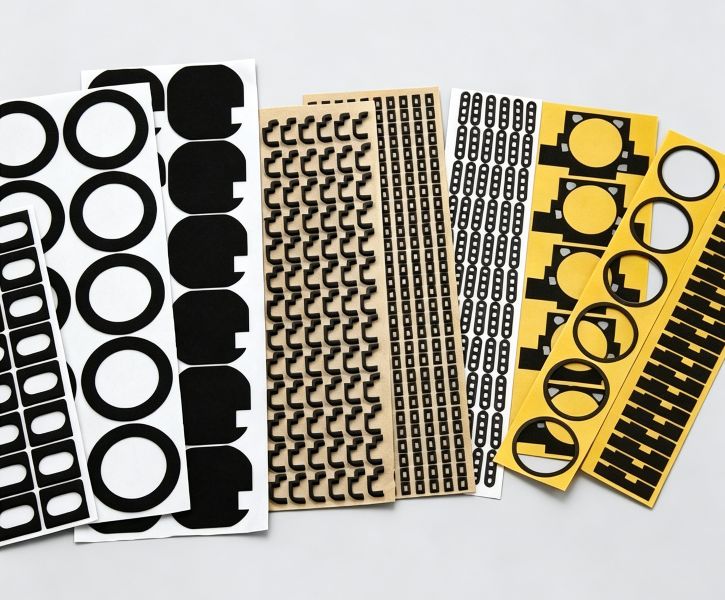
EVA Foam
Ethylene-vinyl acetate (EVA) foam — lightweight, soft, shock-absorbing and easy to die-cut into custom shapes. Wide density range (30–100 kg/m³), adhesive-backing optional. Versatile, cost-effective choice for packaging inserts, equipment feet and consumer electronics cushioning.
Key Features
- Lightweight low density — notable weight saving
- Shock-absorbing with good cushioning
- Easy custom die-cutting, low cost
- Adhesive-backing optional for easy install
Applications
Packaging inserts · Toys · Equipment feet · Consumer electronics cushioning · Appliance cushioning
Material Tags
Technical Parameters
| Material | Ethylene-vinyl acetate (EVA) |
|---|---|
| Density | 30–100 kg/m³ |
| Thickness | 0.8–60 mm |
| Rebound | 20–40% |
| Temperature | 0 ~ 60 °C |
| Processing | Die-cut / Adhesive |
| Die-Cutting Tolerance | ±0.15 mm |
Frequently Asked Questions about EVA Foam
Common questions about die-cutting and material selection for this product
PORON Foam vs EVA Foam Die-Cutting Differences?
PORON is microcellular polyurethane foam with excellent resilience and low compression set — ideal for cushioning, sealing, and repeated compression. EVA is ethylene-vinyl acetate copolymer foam — harder, lower cost, suitable for gap filling and one-time cushioning. Die-cutting processes differ: PORON requires sharp dies to prevent tearing; EVA needs controlled pressure to avoid overcuts.
How to fix burrs on foam edges after die-cutting?
Burrs are usually caused by a dull die or excessive die-cutting pressure. Solutions: use etching or laser dies (30-45 degree blade angle), adjust pressure to just cut through the material, lower the die-cutting speed appropriately, and ensure uniform material thickness. For ultra-soft foam, freeze-and-shape before die-cutting.
How to control dimensional rebound of foam after die-cutting?
Foam materials rebound 0.1-0.3 mm after die-cutting due to compression recovery. Control methods: make die clearance 5-10% smaller than material thickness, let parts rest over 30 minutes before measuring, and reserve rebound allowance in the tolerance. For high-precision parts, use a secondary finishing cut.
Have more questions? Our technical team is ready to provide one-on-one consultation
Contact Us