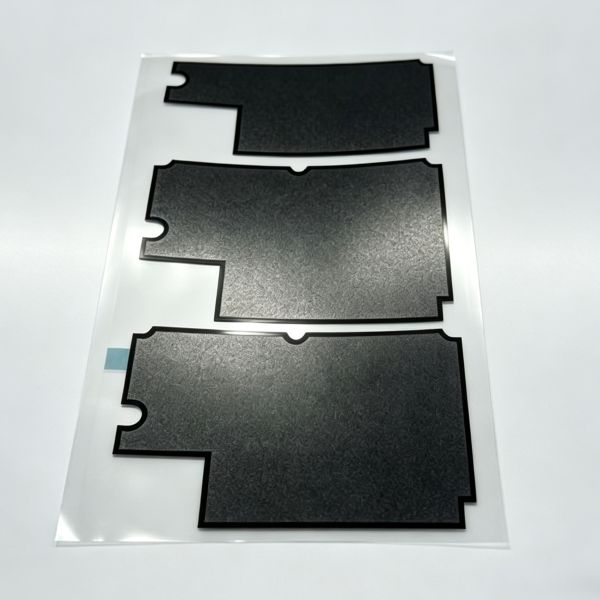
Graphene Thermal Film

Graphite Thermal Materials · Die-Cutting Materials · Precision Engineering

Graphene Thermal Film
Graphite Thermal Materials

Graphene Thermal Film

Graphene thermal film — in-plane conductivity 800–1800 W/m·K, ultra-thin flexible, excellent heat spreading. Bendable for complex curved surfaces. Ideal for flagship phones, high-brightness LEDs and wearables with extreme thermal and space requirements.

Key Features

  • Ultra-high conductivity (800–1800 W/m·K)
  • Ultra-thin flexible, bendable on curves
  • Excellent heat spreading, top-tier efficiency
  • Suited for flagship models & high-power devices

Applications

Flagship phone cooling · High-brightness LED cooling · Wearable devices · High-power flexible device cooling

Material Tags

GrapheneCoolingUltra-high ThermalFlexibleHeat Spreading

Technical Parameters

TypeGraphene thermal film
In-plane Conductivity800–1800 W/m·K
Thickness0.025–0.10 mm
Density1.8–2.2 g/cm³
Temperature−40 ~ 400 °C
FeatureFlexible bendable / excellent spreading
AdhesiveSingle/double-side optional
FAQ

Frequently Asked Questions about Graphene Thermal Film

Common questions about die-cutting and material selection for this product

Natural vs Synthetic Graphite Die-Cutting Differences?

Natural graphite is lower cost (400-700 W/mK), suitable for general thermal scenarios. Synthetic graphite offers higher conductivity (up to 1800 W/mK) and thinner profiles (0.025mm), ideal for high-power chip cooling. In die-cutting, synthetic graphite is more brittle, requiring precision dies and gentler waste removal.

Why does graphite sheet need edge sealing after die-cutting?

Graphite edges shed tiny particles after die-cutting; if these fall into electronic devices they risk short circuits. Therefore graphite sheets are usually edge-sealed after cutting (film lamination over edges) to prevent particle shedding. Common methods: full PET film edge sealing or partial sealing, chosen by application.

What's difficult about ultra-thin graphite sheet (0.025 mm) die-cutting?

0.025 mm ultra-thin graphite tears and deforms very easily, making die-cutting very difficult. Requirements: precision tension-controlled feeding, dedicated ultra-thin dies (15-20 degree blade angle), very low die-cutting speed, and gentle waste removal. Operate in a cleanroom and add visual inspection to ensure no damage.

Have more questions? Our technical team is ready to provide one-on-one consultation

Contact Us

Need die-cutting materials? Contact us for a free solution

Our technical team provides one-on-one consultation with rapid prototyping response

Get Free Quote →
Online Inquiry
WeCom SupportClick to Chat Phone0755-23009171 Emailcs@lsight.com