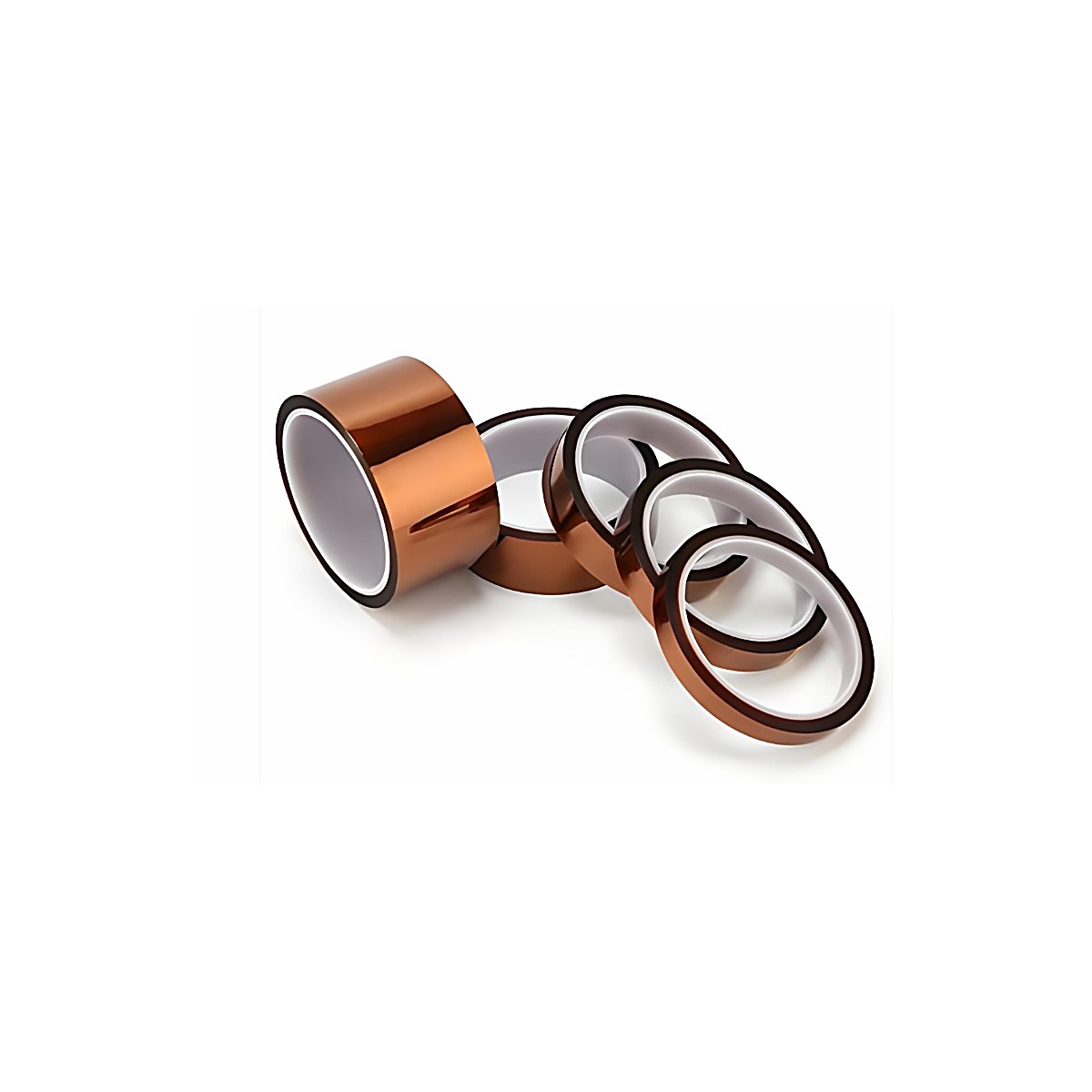
PI Polyimide Tape
Amber polyimide (PI) high-temp tape, rated 200–260°C, standard for SMT reflow soldering. No residue on removal, with insulation and dimensional stability, no shrinkage. Suited for SMT reflow masking, coil wrapping and high-temp process protection.
Key Features
- Rated 200–260°C, meets reflow requirements
- No residue on removal, no substrate contamination
- Excellent insulation performance
- Dimensionally stable, no shrinkage
Applications
SMT reflow masking · Coil wrapping · High-temp process protection · PCB soldering masking
Material Tags
Technical Parameters
| Substrate | Polyimide film (PI) |
|---|---|
| Temperature | 180–260 °C |
| Thickness | 0.05–0.10 mm |
| Residue | None |
| Feature | Insulation / Dimensional stable |
| Application | SMT reflow / Coil / High-temp |
| Die-Cutting Tolerance | ±0.10 mm |
Frequently Asked Questions about PI Polyimide Tape
Common questions about die-cutting and material selection for this product
What Temperature Can PI Polyimide Tape Withstand?
PI (polyimide) tape withstands 260°C long-term and 300°C short-term. Using silicone adhesive, it leaves no residue and doesn't lift at high temperatures — the preferred material for SMT reflow soldering and wave soldering masking. Common thickness 0.05-0.08mm, available in amber and black (black variant also usable for optical light blocking).
What are the special requirements for gold finger tape die-cutting?
Gold finger tape protects the gold finger area during PCB soldering. Requirements: high dimensional accuracy (±0.05 mm) to cover exactly without overflow; no residue after removal that affects conductivity; chemical resistance to withstand plating and cleaning. Common materials: PI polyimide tape or PET red high-temp tape.
What if high-temp masking tape leaves residue after removal?
Residue is usually from adhesive mismatched to temperature. Solutions: confirm temperature stays within rated range (acrylic adhesive residues above 150°C); switch to silicone adhesive (e.g., PI tape, no residue at 260°C); limit heating time; remove while hot — cooling makes residue more likely.
Have more questions? Our technical team is ready to provide one-on-one consultation
Contact Us